
 Image 1 of 2
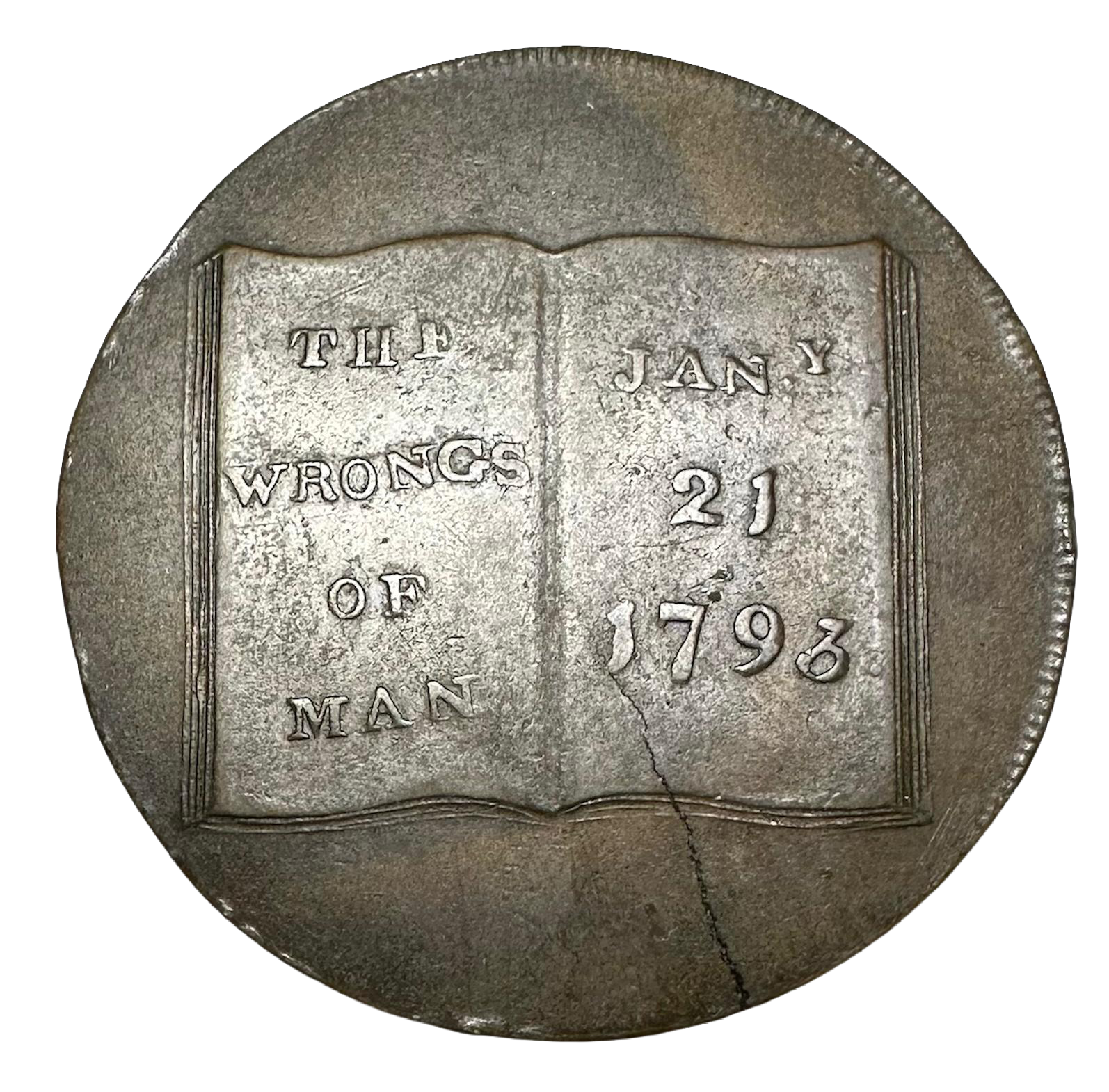 Image 2 of 2
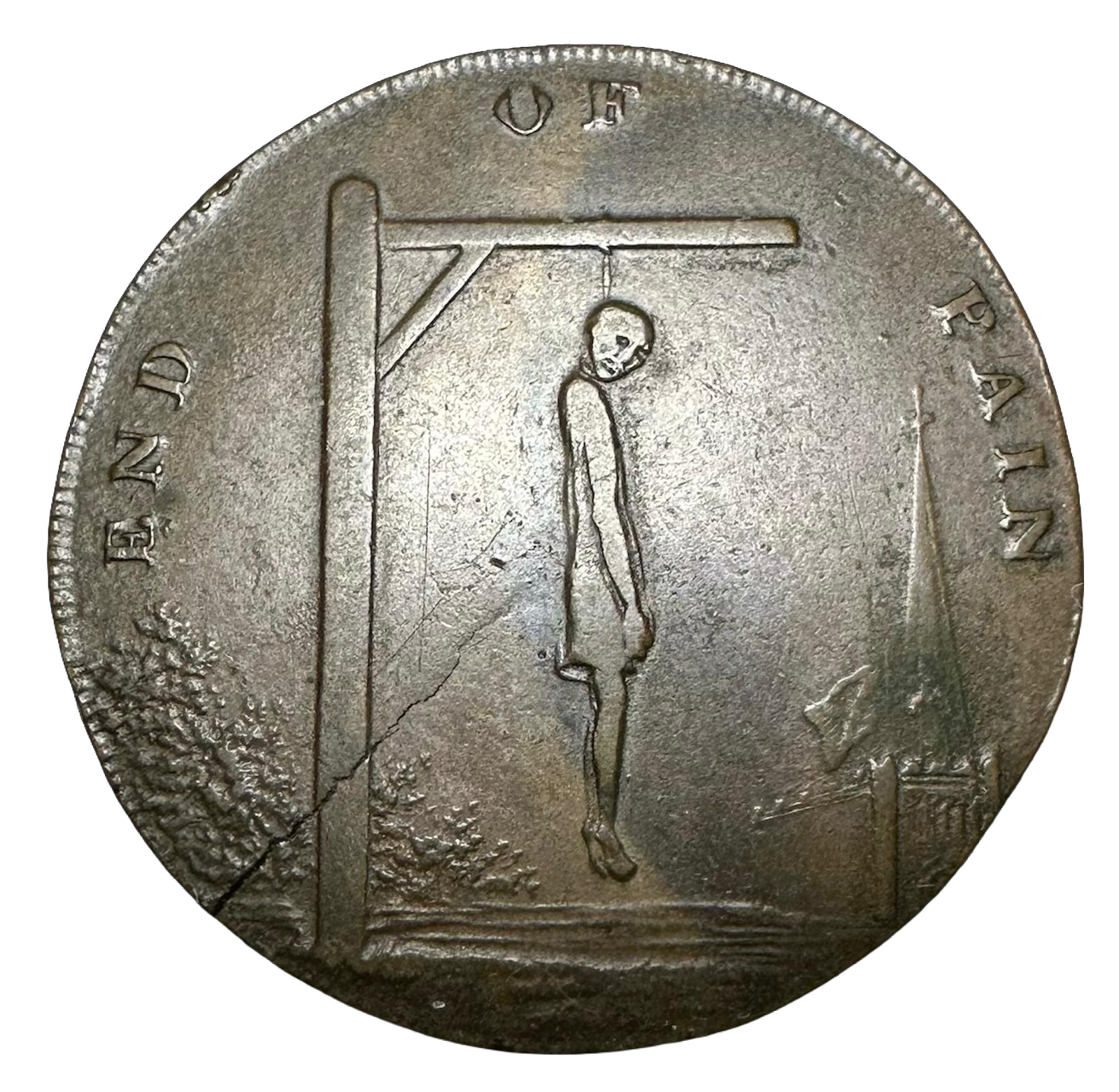
An historically important medal illustrating the “End of Pain,” symbolizing the persecution and political trials of Thomas Paine, and referencing The Rights of Man and The Wrongs of Man on the reverse.
Following the American Revolution, Paine travelled to France in support of republican ideals and played a central role in the Republican Society in 1791, advocating the abolition of monarchy and establishment of a French Republic.
Later that year, he was honoured in London by the Revolution Society, where his speech in support of global revolution attracted the attention of British authorities and contributed to subsequent charges of sedition.
Part II of The Rights of Man, published in 1792 and dedicated to Lafayette, intensified opposition to Paine in England and led to widespread political backlash.
A historically significant and evocative piece.
An historically important medal illustrating the “End of Pain,” symbolizing the persecution and political trials of Thomas Paine, and referencing The Rights of Man and The Wrongs of Man on the reverse.
Following the American Revolution, Paine travelled to France in support of republican ideals and played a central role in the Republican Society in 1791, advocating the abolition of monarchy and establishment of a French Republic.
Later that year, he was honoured in London by the Revolution Society, where his speech in support of global revolution attracted the attention of British authorities and contributed to subsequent charges of sedition.
Part II of The Rights of Man, published in 1792 and dedicated to Lafayette, intensified opposition to Paine in England and led to widespread political backlash.
A historically significant and evocative piece.